Isha Upanishad: Difference between revisions
Jump to navigation
Jump to search
(Created page with "__NOTOC__ {{CWSA}} {| style="margin-left: auto; margin-right: 0px;" | style="text-align:right;" | Download:<br><br> [http://wiki.auroville.org.in/w/images/4/42/17IshaUpanisha...") |
No edit summary |
||
| (13 intermediate revisions by the same user not shown) | |||
| Line 1: | Line 1: | ||
__NOTOC__ | __NOTOC__ | ||
{{CWSA}} | [[Author::Sri Aurobindo| ]][[Year::1915| ]][[Year::1914| ]][[Year::1913| ]][[Year::1912| ]][[Year::1911| ]][[Year::1910| ]][[Year::1909| ]][[Year::1908| ]][[Year::1907| ]][[Year::1906| ]][[Year::1905| ]][[Year::1904| ]][[Year::1903| ]][[Year::1902| ]][[Year::1901| ]][[Year::1900| ]] | ||
{{CWSA|previous=Hymns to the Mystic Fire|next=Kena and Other Upanishads}} | |||
<div align=center style="text-align:center;"> | |||
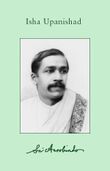
[[File:CWSA cover 17.jpg|110px|link=http://wiki.auroville.org.in/w/images/4/42/17IshaUpanishad.pdf]]<br>[http://wiki.auroville.org.in/w/images/4/42/17IshaUpanishad.pdf PDF (607 pages)] | |||
</div> | |||
{{Fresh}} | |||
(Sri Aurobindo:) “The Isha addresses itself to the awakened seeker; it begins therefore with the all-inhabiting Lord, proceeds to the all-becoming Self and returns to the Lord as the Self of the cosmic movement, because it has to justify [[works]] to the seeker of the Uncreated and to institute a [[divine life]] founded on the joy of immortality and on the unified consciousness of the individual made one with the universal.”<ref>''[[Kena and Other Upanishads]]'', p.24, “The Supramental Godhead”</ref> | |||
</div> | |||
<div style="font-size:16pt; text-align:center;">{{#tip-text:Isha Upanishad|Sri Aurobindo had a special interest in the Isha Upanishad, whose principle of “uncompromising reconciliation of uncompromising extremes” (p. 83) underlies his own philosophy as well. He first translated the Isha around 1900, and over the next fourteen years returned to it again and again, citing, translating, and writing commentaries on this eighteen-verse text.}} | |||
</div> | |||
<div style="padding-left:50px;"> | |||
===Part One: Translation and Commentary Published by Sri Aurobindo=== | |||
:{| | |||
|style="width:400px;"|{{#tip-text:Isha Upanishad|A translation and an analysis in four “movements”, first published in the 'Arya' in ten instalments between August 1914 (the Arya's first issue) and May 1915.}}||style="width:40px;"|3||[[File:Paper icon.png|link=http://wiki.auroville.org.in/w/images/0/03/Isha_Upanishad_-_Translation.pdf]]||[[File:Paper icon.png|link=http://wiki.auroville.org.in/w/images/0/09/Isha_Upanishad_-_Commentary.pdf]] | |||
|} | |||
===Part Two: Incomplete Commentaries from Manuscripts=== | |||
:{| | |||
|style="width:400px;"|{{#tip-text:Isha Upanishad: All that is world in the Universe|Circa 1902; abandoned after a few pages.}}||95 | |||
|- | |||
|{{#tip-text:The Ishavasyopanishad with a commentary in English|Circa 1905. Apparently | |||
intended to be the first of a series of works for the use of students of Bhawani Mandir, where young men would be trained to do selfless work for Mother India. (See CWSA Vol. 6: 'Bande Mataram')}}||101 | |||
|- | |||
|{{#tip-text:The Karmayogin: A Commentary on the Isha Upanishad|Circa 1905 – 06.}}||169 | |||
|- | |||
|{{#tip-text:Ish and Jagat|Circa 1912.}}||303 | |||
|- | |||
|{{#tip-text:The Secret of the Isha|Circa 1912.}}||307 | |||
|- | |||
|{{#tip-text:Chapters for a Work on the Isha Upanishad|Circa 1912. Six draft chapters for a proposed “book” which also deals with Puranic cosmology, the savage and the ascent of the human being, philology, the Veda, and Sri Aurobindo’s method of Vedic and Vedantic exegesis.}}||311 | |||
|- | |||
|{{#tip-text:The Upanishad in Aphorism|Circa 1913 – 14.}}||351 | |||
|- | |||
|{{#tip-text:The Life Divine [Draft A]|Circa 1912. An earlier heading was “The Secret of Divine Life /A Commentary on the Isha Upanishad”.}}||361 | |||
|- | |||
|{{#tip-text:The Life Divine [Draft B]|Circa 1913 – 14.}}||429 | |||
|- | |||
|{{#tip-text:The Life Divine [Draft C]|Circa 1914. Two chapters which seem to represent a transitional | |||
stage between the “Life Divine” commentary on the Isha Upanishad and 'The Life Divine', Sri Aurobindo’s principal philosophical work.}}||551 | |||
|} | |} | ||
<div | |||
''Notes are paraphrased from the “Publisher's Note” and “Note on the Texts”. | |||
{{Fresh}} | |||
<hr> | |||
<br> | |||
<references /> | |||
</div> | |||
==See also== | |||
*[[Upanishads]] | |||
<br> | |||
[[Category:Writings and talks of Sri Aurobindo]] | |||
Latest revision as of 08:34, 25 June 2021
 |
 |

|
(Sri Aurobindo:) “The Isha addresses itself to the awakened seeker; it begins therefore with the all-inhabiting Lord, proceeds to the all-becoming Self and returns to the Lord as the Self of the cosmic movement, because it has to justify works to the seeker of the Uncreated and to institute a divine life founded on the joy of immortality and on the unified consciousness of the individual made one with the universal.”[1]
Isha Upanishad
Part One: Translation and Commentary Published by Sri Aurobindo
Isha Upanishad 3 
Part Two: Incomplete Commentaries from Manuscripts
Isha Upanishad: All that is world in the Universe 95 The Ishavasyopanishad with a commentary in English 101 The Karmayogin: A Commentary on the Isha Upanishad 169 Ish and Jagat 303 The Secret of the Isha 307 Chapters for a Work on the Isha Upanishad 311 The Upanishad in Aphorism 351 The Life Divine [Draft A] 361 The Life Divine [Draft B] 429 The Life Divine [Draft C] 551
Notes are paraphrased from the “Publisher's Note” and “Note on the Texts”.
See also