SAIIER 2016:Lilaloka: Difference between revisions
No edit summary |
No edit summary |
||
| (One intermediate revision by the same user not shown) | |||
| Line 1: | Line 1: | ||
{{SAIIER 2016 Header}} | {{SAIIER 2016 Header|previous=[[SAIIER 2016:Last School|Last School]]|current=Lilaloka|next=[[SAIIER 2016:Nandanam Kindergarten|Nandanam Kindergarten]]}} | ||
__NOTOC__ | |||
===Introduction=== | ===Introduction=== | ||
| Line 92: | Line 94: | ||
File:2016 Lilaloka Transition class.jpg | File:2016 Lilaloka Transition class.jpg | ||
</hovergallery> | </hovergallery> | ||
<br> | |||
[[Category:Reports 2016]] | |||
Latest revision as of 09:21, 12 January 2021
 Last School |
 |
 Nandanam Kindergarten |
| Lilaloka | ||
Introduction
The vision of Entity::Lilaloka (“the universe of Play”, in Sanskrit) is to be a Self-Learning Resource Centre for the Child. Lilaloka will offer various activities based on self-discovery and spontaneous self-learning through Play, which will allow the child to reveal himself as an individual and amongst others, without competition or judgment.
Lilalola will be open to all children, schooled or not, having difficulties or not, beyond all categorizations and allowing mixes of ages. The team of Lilaloka wants to work in collaboration with schools and parents, considering each child as an evolving being. Lilaloka’s Phase I building is currently under construction and the primary activity this year has been of fund raising, communication, project management and construction. In addition, some of Lilaloka members have conducted activities with children under the Lilaloka umbrella at various locations in Auroville.
Activities of the year
Fundraising and Communication
As Lilaloka is a project under construction, public relations, communication and administration are a big part of the work. The activity consists of communicating about Lilaloka, creating communication tools, meeting people, organizing events.
- We kept our social media (Facebook, Twitter, YouTube, etc.) up to date and enlarged our network to reach more people and other educational projects in a spirit of sharing of knowledge and researches regarding new ways of education in today’s world.
- We updated our booklet and flier regarding change of activities and team members.
- Regular guided tours of Lilaloka Land and its first phase building, still under construction, were organized.
- The Lilaloka core team had meetings with people who are interested to offer activities within Lilaloka.
- We introduced and shared the vision and aims of Lilaloka with different AVIs.
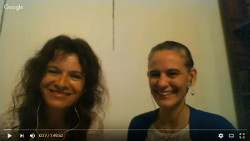
- On 12 of December 2015, Yvelise and Sandrine had an Internet conference with AVI France, organized by Lilaloka, AVI France and Utopia Chloé Sanchez, on the theme “Playing is Learning to Be”. The event took place in what is called "Interactive Cafe" and happened at "L'Atelier du fil rouge”, Paris.
- On 16 of August 2015, there was a fundraising event organized on the Lilaloka land to raise the money to complete the first phase and give Lilaloka a roof.
- We have started to explore and prepare material for a crowd-funding campaign.
- Lilaloka was present on the Christmas fair in the Youth Centre with a play corner and information about the Lilaloka project.
Fundraising and communication outcomes:
- Total amount raised in 2015-16: Rs. 11,40,000.
- Two possible new facilitators who are in harmony with the vision and aims of Lilaloka are interested to share their activities within Lilaloka.
- Emily Klein created a short stop-motion animation to introduce Lilaloka to be used for fundraising (music custom-made by Aristide Rosier).
- We appointed an accountant to assist us with the financial side of the project.
- Booklets and leaflets are up to date.
- Nature’s Theatre gave a presentation at the Teachers’ Centre.
Lilaloka Phase 1: construction and construction site
The roof is under construction and expected to be finished and covering the construction by the end of June 2016. Maintaining the existing construction, fence, planting and care for the land and nursery is ongoing on a daily basis. Rajan, our care-taker, started to create a garden.
Occupational Therapy and Supportive Learning Facilitation
This activity will be going on but not anymore under the umbrella of Lilaloka.
Creative Radio Sessions: a Lilaloka activity offered to Deepanam School by Sandrine
The creative radio sessions took place this year in August-September 2015 at Deepanam School with the class of 11-12 year old students. Bhakti, their teacher, initiated this project about self-esteem and emotions, using a poem titled “I’m” to be completed freely by the students. First, we used this written creation for the children to get used to the microphone, learn about themselves, their voice, how to record and rehearse, as many times as they felt needed to be satisfied and confident. Then, we used the joyful model of the Chinese portrait which allows defining oneself by analogy in a creative and playful way. Each question starts by “If you were”. It became a two by two game in dynamic interview. Finally, to go one step further, we added some more open questions like: “If you could create a new world”, “if you were president”?
It was a wonderful experience to listen to their ideal and dreams. In short: They want to save the planet, they want to save the people, and they want kindness and Love to save the world!
The final product is a set of 10 individual self-portraits, each one unique and very personal, which they can keep as a “sound photography” of themselves in their path of evolution and inner growth, and a reminder of their own higher goal.
Nature’s Theater offered by Anna
In Transition school: For Transition School students Entity::Nature's Theatre was offered as a two-month workshop for second graders and an introductory three sessions for third graders. We explored and learned to use the compass and constructed our first shapes: the circle and the 5-pointed star. We experienced how this shapes relate to our own body. We learned that nothing exists without a first point, a centre around which it revolves. We related that point to our own centre, to our own beginning within the belly of our mother. That point knows exactly who we are, how we look and where our talents lay.
To follow the story “1, 2, 3, and a Star We Be” gives each child the possibility to experience and understand its own centre and boundary. What happens if we lose this point and our actions become pointless? What do we lose? What happens to the collective when we shoot far beyond our boundary? With the second graders I had more sessions. We decided to create 3 worlds: one of fairies, one of pirates and one of animals. It was a collective effort with a lot of support from the regular teachers. One group created the characters, and the other three groups created the three worlds. We all experienced the joy of working together, creating together, collaborating and realized that our ideas and talents can benefit the whole. It was a wonderful experience of working together, teachers and children.
In TLC: I worked with my regular groups of second and third graders in TLC. I have been working with these groups from their first year in TLC. Each beginning of a year is a continuation of the last, and we use that what we have learned in our new creations. Both groups wanted to make dolls and create a world for them to live in. I developed a technique and found the material to create the dolls. They had to be strong, washable and it had to be possible for the youngest ones to make them. I used the 5-pointed star within the circle to get the right body proportions in three different sizes. The children called the dolls “bendies”. They were loved and fun to play with – they became acrobats, balancing on top of each other, building pyramids. It was a joy to follow the children in this process.
Once the dolls entered the groups the stories kept on developing themselves, from individual rooms to community house, collective playground and a swimming pool. The family of dolls got furniture, collective kitchen, swings etc. The world grew so big that I made a set of 14 dolls to add to the play in our sessions. Each session was a combination of building a community and playing out the day by day life in a community.
Outcome and reflections on Nature's Theatre: Observing the joy and intensity with which the children were playing made us decide within TLC to give this doll community a place, so it could be used on a day-by-day basis. Many parents informed me that they were regularly taken to this place of play to follow what was happening in the doll community. It was a beautiful experience of sharing. To work with two different groups on different days on the same project was an interesting experience for all of us.

Outcomes
We expanded our communication network with many more followers of the Lilaloka project. Our activities benefited two groups in TLC, two groups in Transition School, one group in Deepanam school, some individual children, and teachers.
Reflections
Beside the running affairs, the most meaningful was our continuous communication and research in new ways of education, within Auroville and around the world. We had many requests from facilitators and parents to join Lilaloka (Newcomers, Newcomers-to-be as well as Aurovilians and volunteers).
There are more than 20 children in Auroville who are not participating within the existing schools. Most of these parents follow very closely the development of Lilaloka and would like their children to be able to join.
Conclusion
Our main focus for next year will be to fundraise for the completion of the construction (needed: around 42 lakhs) and for the Educational Equipment (needed: around 20 lakhs). We will start to offer activities (collective board games, Nature’s Theater, Fairy garden creations...) within the Lilaloka compound as soon as the roof is up.


